This is the rebuilt Dream Pod 9 Community Blog.

Currently content and layout is being updated and reformatted. (again)

Articles

Guides

Editorial Policy

Please contact prof9844 on the Discord for questions about content.

The Shepherd’s Path, Part 25: Revelation

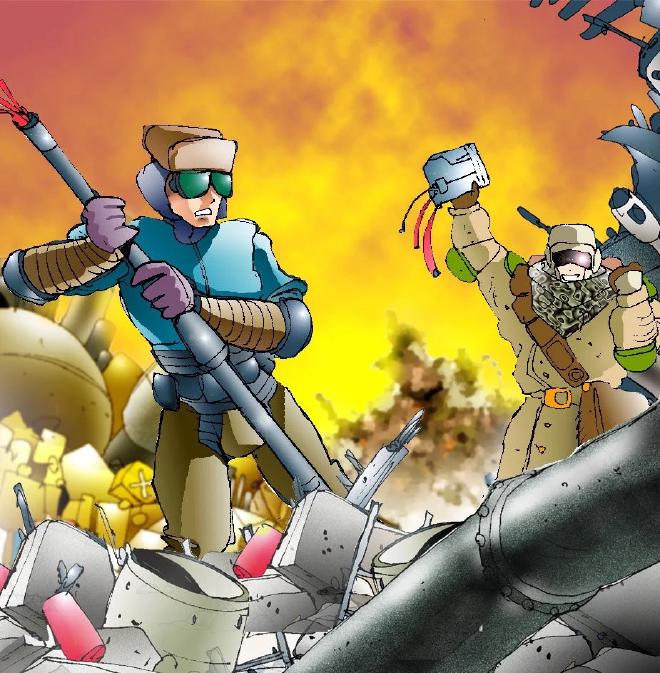
New Jerusalem’s isolation lasted until 728 NJ (6136 AD)l when a mysterious fleet of ships identifying themselves as the CEF 7th fleet gated into the system. The CEF observed the primitive armies of the various powers on the planet and judged them to be a non-threat. The Shepherds remained hidden, using centuries of experience to keep their strength unseen by these new visitors. Shepherds’ leadership set up a mission to contact the new arrivals. This diplomatic mission met with the CEF commanders’ multiple times, though what exactly transpired remains unknown to all not involved. When the last meeting was over, the CEF Admiral left and ordered his fleet to withdraw from the system, declaring he would no longer support the NEC. A brief power struggle saw him and some 75% of the fleet, including almost all the warships, break contact and jump out of the system. The remaining forces were stranded aboard their troop transports, now short on supplies and equipment, and were forced to make a decision. Seeing the pathetic nature of the defenders, they opted to continue their assault on the planet. They concentrated their landing zone in one largely uninhabited region to maximize their limited forces’ effect. As their units made landfall, Shepherd space forces struck. The remaining CEF ships in orbit were destroyed or captured, cutting off the ground forces who then found themselves attacked by an enemy far more advanced than they had anticipated. The initial landing zones, concentrated in forested regions to prevent observation, soon turned into furnaces as local forces lit them ablaze. The unique silicon-based composition of the trees burned off into ash which clogged CEF combat vehicles and caused breathing problems for infantry. Without the ability to take in air, hovertanks essentially became slow, static defenses. Frames fared better, but the failure of their hover systems put them at a mobility disadvantage against angels. The Shepherds struck repeatedly. and within weeks had functionally annihilated the invaders’ command structure. The CEF was reduced to a handful of highly fortified bases set up in the landing zone. Cut off from any hope of escape, the remaining forces fought much more ferociously than would typically be expected from the CEF on the defensive. By the time these pockets were liquidated, over 20% of the Shepherds’ pre-invasion combat strength had become casualties. Despite the Shepherds’ best efforts, a small significant portion of the invasion force managed to evade capture and would go in to form holdout cells across the planet.

[Read More]
Categories: background  Tags: History 301 

Kodiak Variants Dominate the Battle

HACS-10HG-CR Northstar Kodiak
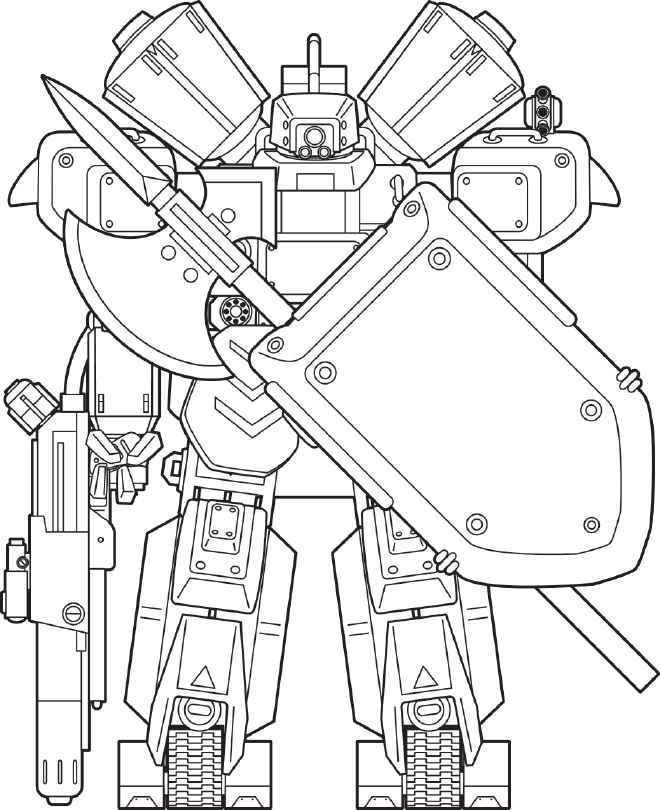
While the Kodiak Destroyer was designed to magnify the power of the Kodiak, the Northstar was designed to enhance its prestige. Even though the Northern Guard and Valeria have significantly fewer ceremonial events than the Southern Republican Army and Port Oasis, morale and special events remain important concerns and the Northstar exist because of these considerations. Using salvaged battlefield machines as a base, the Northstar was completely rebuilt with advanced targeting computers and experimental control systems provided by several corporations, including Hyperion Werks, making them very effective in combat but extremely expensive. The Northstars were armed with Sergon Optics laser rifles, custom made Northco Weapons heavy vibroblade halberds, and a variety of antipersonnel weapons. They usually carry large ceremonial shields emblazoned with the tripartite Confederated Northern City-States crest. This weapons layout was designed not only to be visually impressive on parade, but to be effective in the close urban quarters that the Northstar will be expected to fight when undertaking its primary duty of defending the heart of the CNCS. 

[Read More]
Categories: blitz hobby  Tags: HGB3.1 Kodiak 

The Shepherd’s Path, Part 24: Beyond the Angels

The Order of Saint Martin oversees the infantry formations of the Shepherds. These units operate as mechanized infantry, either in direct combat roles or as combat engineers. Infantry often fulfill security roles in urban areas. Typical units are mounted in Tenet APCs with a command vehicle for the platoon and company command elements. Doctrinally, these units favor fire and maneuver, and include a selection of heavy weapons to deal with a variety of targets.

[Read More]
Categories: background  Tags: Engineering 101 

Crossfire Crusader IV

Crusader Crossfire

The Crusader was introduced as an alternative to the polar Grizzly and Cobra early in the TN 1800s to very poor reviews and even worse sales. Over the next few decades, Paxton Arms reworked the Crusader until a more functional vehicle was created. The Crusader IV was much better than its predecessors and was even used by some desperate polar forces in the War of the Alliance.

[Read More]
Categories: blitz rpg hobby  Tags: HGB3.1 

The Shepherd’s Path, Part 23: Life in Sanctuary

It should come as no surprise that religion is common and flourishing in Sanctuary. However, the topic of religion is considered very private and overt displays of faith outside of the actual act of worship are quite rare. The Shepherds do not consider themselves a religious organization. Any member is free to believe in whatever religion they want, or none at all should they choose. Due to the nature of the colony’s history, it is almost unheard of for someone to not be Jerusalemite, but that fact is considered just another aspect of a person like their hair or eye color. For most people, though, their faith is a major component of their life. Religious services for all sects are common and readily available for those seeking them. The nature of someone’s practice of their faith is considered highly personal, and criticizing it is seen as one of the highest forms of disrespect.

[Read More]
Categories: background  Tags: Home Economics 101 

The Shepherd’s Path, Part 22: Faith

The Jerusalemite religion is an amalgamation of all the various Abrahamic faiths that existed prior to the Second Ice Age. The main cause of their merging was the threat to the holy land by forces of the Compact of Revelation. The nations dominated by Abrahamic religions formed a military alliance to protect the holy land against this threat. As the centuries wore on, this military alliance became something more. Terminology, ideas, and various aspects of each faith crossed over into each other, further blurring the line between the various religions. It became perfectly normal for a group of nuns led by an Imam to celebrate Hanukkah. When the glaciers receded over a millennia later, those divides had largely disappeared. The adherents of these various faiths considered themselves Jerusalemites. 

[Read More]
Categories: background  Tags: Fashion 101 

Engineering Armigers & N-KIDU

Utopia is a world racked by war and nuclear radiation. The limited access to resources as well as high demand has fostered a ‘waste nothing’ attitude amongst some Utopians. When preparations were made for the invasion of Terra Nova, this would manifest in the Engineering Armiger and N-KIDU. The initial development of the armiger and N-KIDU concepts was fraught with intrigue and corporate espionage, all facilitated by the CEF who sought to create a stronger Utopian force. The result ended up with Kogland armigers and Steelgate N-KIDUs that often served the same role. Field testing of both design families showed that they operated best in conjunction with each other and soon the concept of armiger and N-KIDU teams was born. Initial focus was on the development of combat units and those are what would serve in the opening act of the CEF invasion of Terra Nova. Support units were in development but, due to limited timeframes, were not ready for the first wave of the invasion. Reinforcements from Utopia have included these new designs and foremost among them is the Engineering Armiger and N-KIDU. The Engineering Armiger is a simple armiger design that can repair and maintain forces in the field. The N-KIDU can do the same but is also outfitted to lay mines.

[Read More]
Categories: blitz  Tags: HGB3.1 

The Shepherd’s Path, Part 21: Angels

The Shepherds use the term “angel" to refer to any legged combat platform or derivatives thereof. The origin of the design of the angels dates to the Later Crusades and the fall of Kir Arya. The Prime Knights of Kir Arya used combat walkers called Paladins as their primary mechanized combat unit. According to historical records, Paladins were large, fast, heavily armed, and well armored, which allowed them to engage all types of foes in nearly any type of terrain. After the fall of Kir Arya, wrecked Paladins were taken and analyzed by both the Council and Compact nations that took part in the invasion. They all came to the same conclusion, however, about the design’s long term viability. Paladins were technologically feasible but would be prohibitively expensive, and would need massive overhauls to be usable by pilots who were not Prime Knights.

[Read More]
Categories: background  Tags: Taxonomy 101 

The Shepherd’s Path, Part 20: Virtues

All angels (the Shepherd’s term for their combat walkers) have a support system called a virtue, which as with everything else involving them is a reference to an order of angels. Virtues are not true independent artificial intelligences, although they are closer than the ONNs of Terra Nova and even some Utopian NAIs. Though pilots input commands to an angel via a series of joysticks, pedals, buttons, switches, and even verbal commands, it is the virtues that take these inputs and convert them into motion of the machine. Virtues are fully interactive, capable of replying to queries and even carrying on a conversation. It’s not abnormal for them to develop personalities, and as long as they perform their tasks to spec those personalities are allowed to stay. An angel pilot is generally assigned a virtue upon graduation, and that virtue follows them through their career. Many pilots consider their virtue as something more than a pet but less than a person. Pilots will often give them names such as Athena, Tenor, and Echo. Black Talon operatives have noted that it seems virtues are far more interactive than expected given their function. Reports of pilots carrying on conversations about things unrelated to combat in an angel have been reported, and even cases of pilots and virtues disagreeing on topics. Ultimately, though, the virtue is subordinate to the pilot. It will always comply with the pilot’s commands, although  if reports are to be believed it will sometimes offer a sarcastic remark about them. [Read More]
Categories: background  Tags: CompSci 101 

The Brahmin and Pride-Killer Cobras

The Brahmin Project

The Brahmin Cobra project dates to 1916 but it was not until the 1930’s that workable designs were finalized. Originally designed as a heavy C3 gear, the Brahmin originally mounted a heavy snub cannon and significant communications gear. Prototyping was still in process during the Inter Polar War but the data provided allowed Territorial Arms to develop a more fearsome machine. The most direct results of this data were the splitting of the Brahmin C3 suite from the base weapons loadout. The Brahmin’s communications gear was adapted as an addon for existing Cobras. Issues around the back mounted rockets delayed its deployment but by the late 1940s the Brahmin upgrade was available in limited numbers. The original weapon loadout proved very popular in the field and requests came in for Brahmins that would go on to fill assault roles instead of command and control roles. Territorial Arms took the loadout and created the Pride-Killer Cobra, a direct challenge and insult to the CNCS and its seeming obsession with snub cannons.

[Read More]
Categories: blitz  Tags: HGB3.1