Posted on May 29, 2025
|
6 min
|
1079 words
|
DP9 Contributors
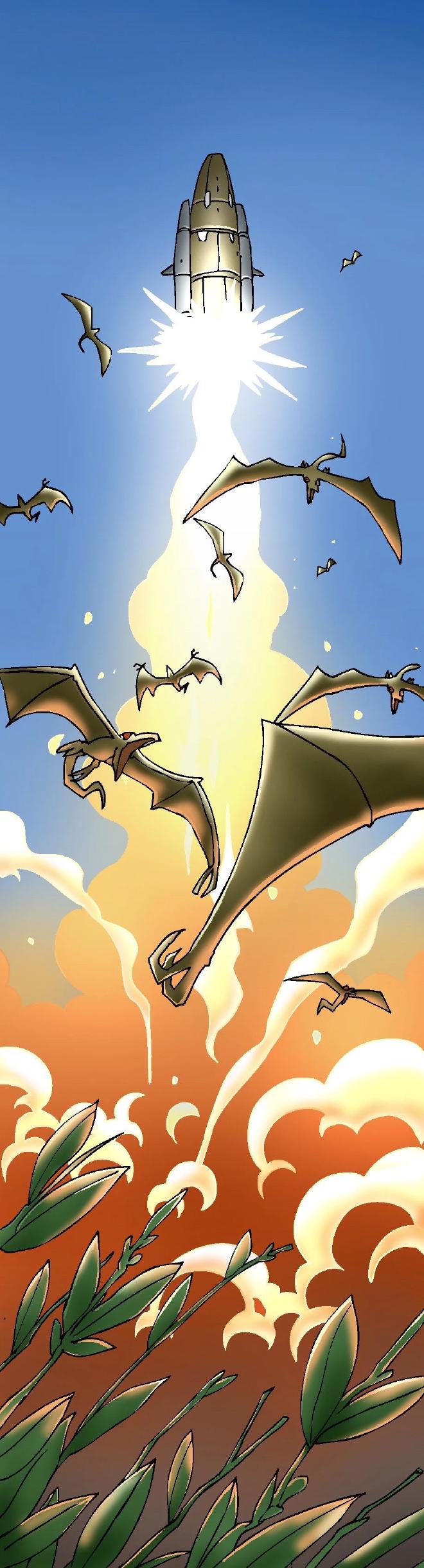
One of the CEF 8th Fleet’s greatest advantages in their second invasion of Terra Nova has been the control of outer space. During the War of the Alliance, Terra Nova was able to inflict serious damage to the invading fleet through deploying huge minefields of autonomous suicide drones, forcing them out of orbit and leaving the ground forces trapped on the planet without support. A major focal points of the planning for the second invasion was finding ways to mitigate the threat this posed to CEF operations. Thanks to advances in space combat doctrine and the use of specially designed ships like the Ballista-class, mass-scale minelaying operations like the ones during the War of the Alliance have become extremely risky for Terra Novan forces and few have been conducted recently thanks to high projected losses, with the focus instead turning to smaller minelaying groups operating independently. While this has proven sufficient to protect the major strategic locations on Terra Nova from orbital attack, it has been incapable of locking sectors of space in high orbit thanks to the CEF’s own minesweeping efforts, allowing Earth significantly more freedom to operate in space than they had during the first invasion. This has allowed the CEF to keep their planetary forces resupplied and even conduct large-scale transatmospheric redeployments between fronts, giving them much more tactical flexibility to respond to Terra Novan attacks.
Posted on March 22, 2023
|
2 min
|
403 words
|
DP9 Contributors
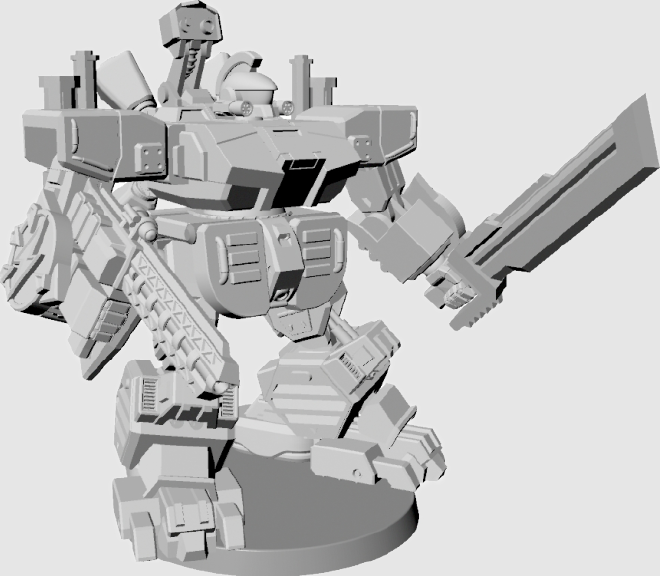
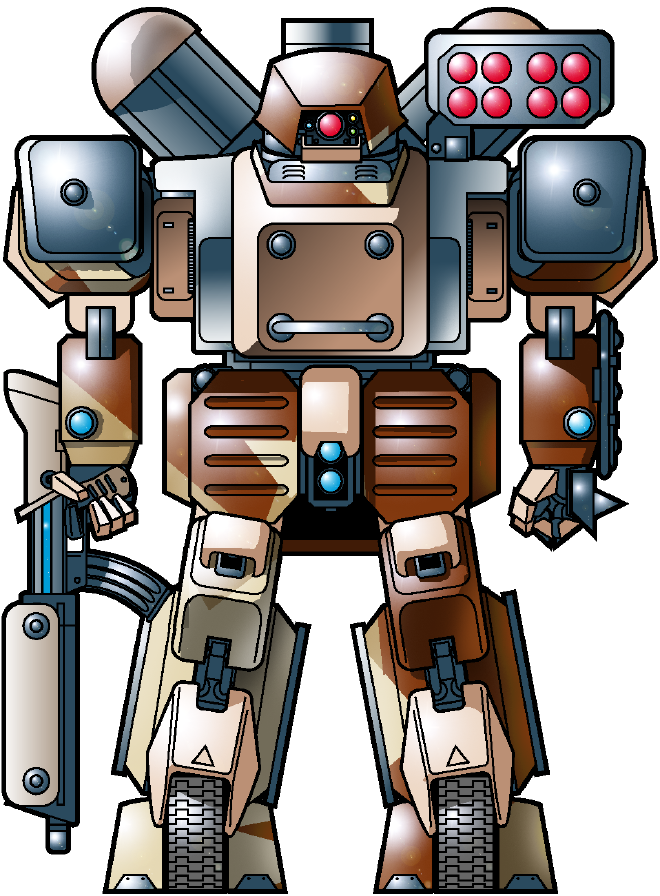
HACS-01MG-FU/A BEARHUNTER
Ever since the arrival of the Armored Hunter, the armorers of the 33rd HG regiment had been trying to tackle the problem of the high pilot casualty rate. Their Armored Hunters were performing poorly, and more than one mission was scrubbed because of “sudden equipment failure.” Most officers just shrugged; relieved at not having to send men out to die in underpowered tin cans, they just grabbed the nearest requisition sheet and tried to get new machines for the umpteenth time. The Armored Hunter was just far too heavy for its S-V950B engine. The powerplant performed well with the recalibrated actuators, but just could not provide enough power for fast, agile move- ments. Without the extra power, the Armored Hunter was a suicidal machine to pilot, so slow that it could be picked off by enemy Gears despite increased armor and could barely mount a counter-attack. As is often the case with military design flaws, the solution to the problem was discovered by coincidence and in the field.